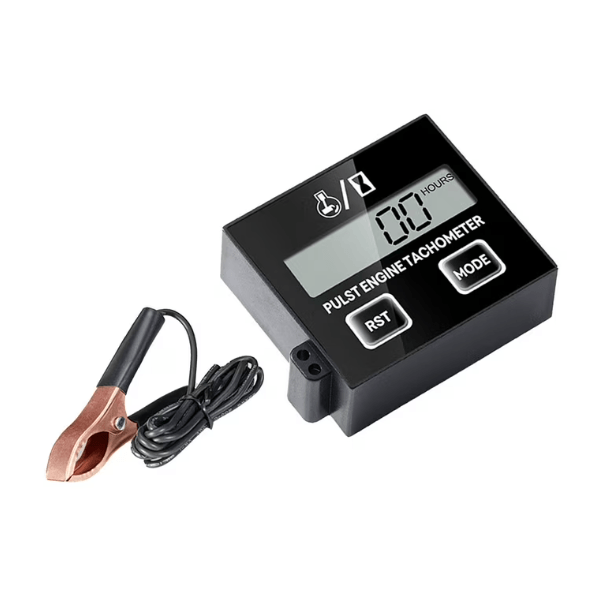
If you own or want to buy a chainsaw, you probably know how important it is to keep the chain sharp and the fuel fresh. But there’s another tool that often gets overlooked, yet can make a huge difference: the tachometer. This handy device measures your engine’s RPM (revolutions per minute) and helps you tune your saw, maintain peak performance, and extend its life.
Whether you’re a weekend DIYer or a seasoned professional, knowing why a tachometer matters can save you time, money, and frustration on every cutting job.
What Is a Chainsaw Tachometer?
A chainsaw tachometer is basically a speedometer for your engine. Instead of telling you how fast you’re moving, it measures how fast the engine is spinning. There are a few types: contact tachometers that attach directly to the engine, non-contact optical tachometers that use a laser or light sensor, and both digital and analog models that give you either a precise number or a needle reading.
No matter the type, the goal is simple: keep your chainsaw running at the right RPM so it performs efficiently, safely, and reliably.
Why RPM Matters
Engine speed—or RPM—is critical for your devices’s performance. Run it too high, and you risk overheating or damaging internal parts. Run it too low, and your cuts become inefficient, inconsistent, or even unsafe.
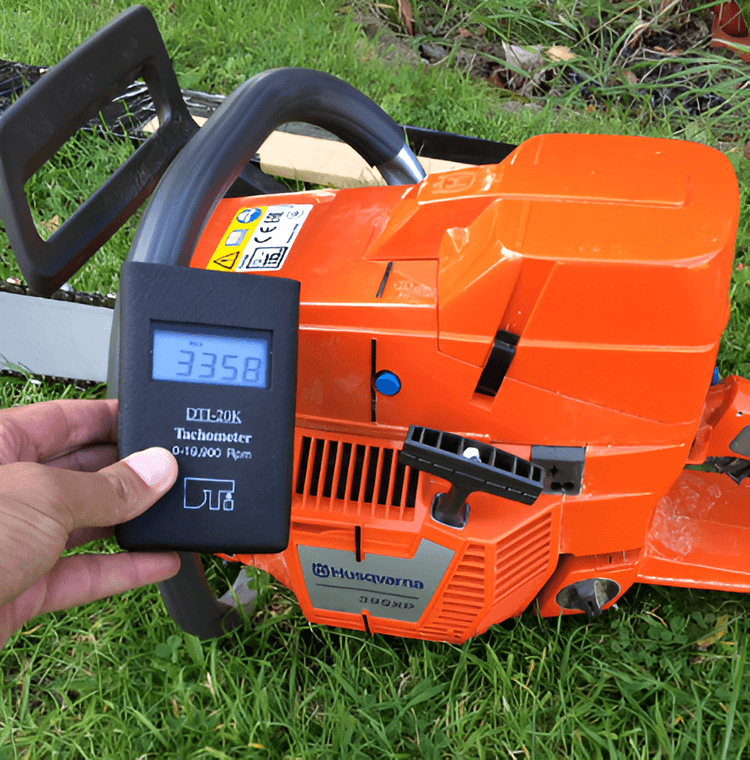
Maintaining the correct RPM also improves fuel efficiency. A properly tuned engine burns fuel more cleanly, giving you better performance and saving money over time. Essentially, understanding your saw’s RPM is key to chainsaw maintenance that keeps your tool working like new.
How a Tachometer Helps With Carburetor Tuning
One of the biggest benefits of a tachometer is accurate carburetor tuning. Chainsaw engines usually have two main adjustment screws: a high-speed screw that controls the engine at full throttle and a low-speed screw that manages idle and slow speeds.
Without a tachometer, adjusting these screws is mostly guesswork. You might end up running the engine too lean, which can overheat it, or too rich, which wastes fuel and reduces performance. A tachometer lets you set these adjustments precisely, ensuring the engine runs smoothly, reliably, and at the ideal RPM for every task.
Signs You Might Need a Tachometer
How do you know if your device could benefit from a tachometer? Watch out for these signs:
- Your engine sounds uneven or off at full throttle.
- Carburetor adjustments don’t seem to fix performance issues.
- Chain speed fluctuates or cuts are inconsistent.
- You want to maintain your saw like a professional, with precision and confidence.
If any of these apply, a tachometer can take the guesswork out of tuning and keep your chainsaw performing its best.
Advantages of Using a Tachometer
Using a tachometer gives you several clear benefits. It protects your engine by keeping RPMs in the safe range, maximizing cutting efficiency and minimizing fuel waste. It also improves safety by preventing over-revving, reduces wear and tear, and saves time by taking the guesswork out of adjustments.
In short, a chainsaw tachometer is a small investment that pays off with smoother, more efficient, and safer cutting.
Tips for Using a Chainsaw Tachometer
To get the most from your tachometer:
Start by attaching it according to the manufacturer’s instructions, either clipped on or positioned for a clear line of sight. Start the chainsaw and let it idle, then rev to full throttle. Compare the reading to the recommended RPM in the manual, and adjust the carburetor screws as needed. Recheck the RPM after each adjustment.
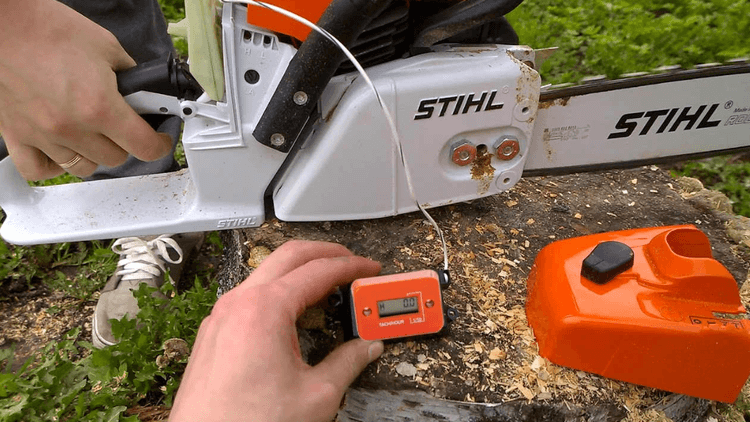
Many tachometers work across multiple tools, so you can use the same device for trimmers, or blowers as well, making it a versatile addition to your toolkit.
Is a Tachometer Worth It?
Absolutely. Relying solely on sound or feel is imprecise and risky. A tachometer ensures your chainsaw runs at the correct speed every time, performs efficiently, avoids unnecessary engine wear, and lasts longer, saving you money on repairs or replacements. For casual users and professionals alike, it’s one of the most practical tools for chainsaw maintenance.
Conclusion
A chainsaw tachometer isn’t just a gadget—it’s a must-have for anyone serious about maintaining their saw. It lets you tune your engine accurately, prevent damage, and get the best performance possible. Whether you’re cutting firewood, trimming trees, or tackling DIY projects, a tachometer keeps your device running smoothly, safely, and efficiently.
FAQs
1. Can I tune a chainsaw without a tachometer?
Yes, but it’s mostly guesswork and increases the risk of engine damage or poor performance.
2. How do I know the correct RPM?
Check your chainsaw’s manual; it lists recommended idle and full-throttle RPM ranges.
3. Are cheap tachometers accurate?
Some are reliable, but consistency and durability vary—choose a trusted model for best results.
4. Can one tachometer be used for multiple tools?
Yes, most work also with trimmers, blowers, and other small engines.
5. Do professionals use tachometers?
Absolutely. Many rely on them to maintain optimal performance and prolong engine life.