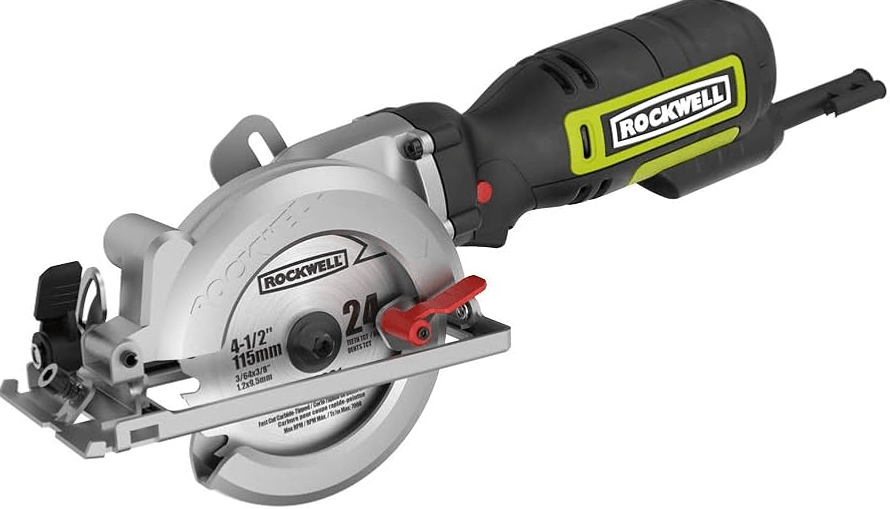
After putting the Rockwell RK3441K through multiple real-world tasks—sheet goods breakdown, framing cuts, and overhead trimming—I approached it like I would any tool: not by what it promises, but by how it actually performs under pressure.
What stands out quickly is how well it handles quick, controlled cuts in situations where larger saws feel excessive. It’s not built for heavy-duty ripping all day—but for precision tasks, tight spaces, and fast adjustments, it holds its own surprisingly well.
This isn’t a full-size circular saw—and it’s not trying to be. It’s a specialized, compact solution. And once you understand that, it starts to make a lot of sense—especially if your workflow benefits from speed, control, and reduced fatigue over raw cutting power.
Ease of Use: 🌟🌟🌟🌟🌟
The compact body and lightweight design (~2.3 kg) immediately change how the tool feels in hand.
From a carpenter standpoint, control is everything. So how does this affect usage? You get significantly better one-handed control, especially during awkward cuts. I was able to guide the saw more precisely with less effort compared to heavier 7-1/4" models.

The left-side blade orientation is another professional-grade advantage. So how does that translate in practice? Your sightline to the cut is naturally clear—no need to reposition your body or lean over the saw. That directly improves accuracy and reduces user error, especially on finish cuts.
Design and Build Quality: 🌟🌟🌟🌟☆
The saw feels well thought out rather than overbuilt.
The ergonomics are excellent—the grip, balance, and trigger placement all support controlled operation. So how does that affect real use? You maintain accuracy longer because your hand isn’t fatiguing as quickly.
The dust port is another practical feature. When connected to extraction, it keeps the cut line visible. Better visibility equals better precision and fewer mistakes—especially on finish work.
Portability: 🌟🌟🌟🌟🌟
On a jobsite, portability isn’t just convenience—it’s pure efficiency.
This circular saw is lightweight, easy to carry, and quick to reposition, which means less downtime between cuts. In real-world use, you’ll naturally reach for it instead of hauling out heavier equipment—especially for quick jobs or tight spaces.
For ladder work or overhead cuts, the reduced weight is a game changer. You’re not fighting the tool or gravity—you’re working smoothly, with better control and less strain.
Performance: 🌟🌟🌟🌟☆
The 5-amp motor paired with a 4-1/2 inch thin kerf blade creates an interesting performance profile.
So how does that affect cutting? You get fast, clean cuts with minimal resistance. The saw doesn’t feel overpowered—it feels efficient. On plywood, OSB, and standard 2x material, it moves smoothly without hesitation.
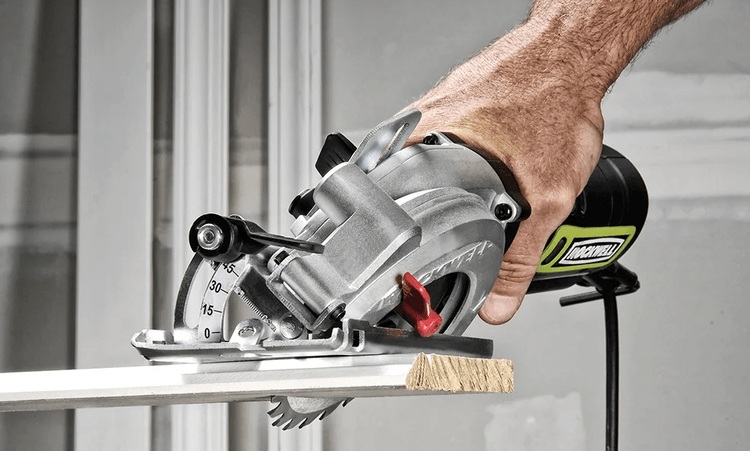
However, as an experienced user, you notice the limits. When pushing into thicker hardwoods or stacked materials, the motor requires a more controlled feed rate. So what’s the takeaway? It performs best when you let the blade do the work instead of forcing it.
Efficiency: 🌟🌟🌟🌟☆
Efficiency comes from how effortlessly the DEWALT DWS780 operates.
The thin kerf blade reduces drag, allowing faster, smoother cuts with less effort. This not only improves cutting speed but also helps reduce fatigue during long or repetitive tasks, keeping your workflow consistent.
Its quick depth and bevel adjustments further enhance efficiency, letting you switch settings rapidly without interrupting your rhythm—a major advantage when handling multi-step projects or frequent angle changes.
Value for Money: 🌟🌟🌟🌟🌟
From a professional perspective, value isn’t just about price—it’s about utility.
This tool fills a very specific role: fast, controlled, lightweight cutting. So how does that translate financially? It saves time and effort on smaller tasks, which adds up over time.
For DIY users, it’s even more compelling—you’re getting near-professional handling without paying for unnecessary power or bulk.
⭐ Star Ratings Summary
| Feature / Aspect | Rating (max 5 stars) |
|---|---|
| Ease of Use | 🌟🌟🌟🌟🌟 |
| Design and Build Quality | 🌟🌟🌟🌟☆ |
| Portability | 🌟🌟🌟🌟🌟 |
| Performance | 🌟🌟🌟🌟☆ |
| Efficiency | 🌟🌟🌟🌟☆ |
| Value for Money | 🌟🌟🌟🌟🌟 |
Uses
The Rockwell RK3441K shines in light-duty and precision cutting tasks where a full-size saw would be cumbersome:
- Sheet goods breakdown: Plywood, MDF, OSB, and thin panels
- Trim and finish work: Cutting door jambs, moldings, and skirting boards
- Overhead or elevated cuts: Lightweight design reduces fatigue
- Quick project tasks: Furniture assembly, DIY home improvements, and simple carpentry jobs
- Tight spaces: Ideal for cutting in corners or confined areas where a larger circular saw cannot fit
By matching its capabilities to these tasks, you save time and reduce physical strain without compromising accuracy.
Suitability for Various Users
- Beginners: Extremely forgiving and easy to control
- DIY users: Ideal for home projects, renovations, and furniture work
- Professionals: Best used as a secondary saw for quick cuts, punch-list tasks, or tight access work
- Heavy-duty users: Not suitable as a primary saw for framing or thick material processing
Why Should You Buy It?
You should consider the Rockwell RK3441K if your priority is control, convenience, and efficiency over raw power.
In real-world use, this is the kind of tool you grab when:
- You need to make quick, accurate cuts without setup hassle
- You’re working in tight spaces or awkward positions
- You want a saw that reduces fatigue during extended use
- You don’t need the bulk and power of a full-size circular saw
It’s especially valuable as a secondary tool for professionals or a primary saw for DIY users who want something easy and reliable.
Things To Reconsider
Before buying the Rockwell RK3441K, there are a few practical limitations to keep in mind.
The cutting depth is limited, so it can’t handle very thick materials or heavy framing tasks. The motor, while efficient, isn’t designed for prolonged heavy-duty use—pushing it too hard can slow cuts and reduce performance.
Being a corded tool means you’ll need access to power and deal with cable management on some jobsites, which can be inconvenient in tight spaces.
If you already own a full-size circular saw, this model won’t replace it. Instead, it’s designed to complement your main saw, offering precision, portability, and ease of use for lighter, faster tasks.
Rockwell RK3441K – Pros & Cons
Pros:
- 🌟 Compact and lightweight for easy handling and portability
- 🌟 Thin kerf blade delivers smooth, precise cuts with less effort
- 🌟 Quick depth and bevel adjustments for faster workflow
- 🌟 Excellent for light-duty tasks like sheet goods, trim, and overhead cuts
- 🌟 Affordable option among best performing miter saws that are affordable
- 🌟 Corded design provides consistent power without worrying about batteries
Cons:
- ⚠️ Limited cutting depth—not suitable for thick lumber or heavy framing
- ⚠️ Motor not designed for prolonged heavy-duty use
- ⚠️ Corded design requires access to power and cable management
- ⚠️ Cannot replace a full-size model—best as a complementary tool
- ⚠️ Less effective for large-scale construction projects or dense hardwoods
Final Thoughts
From an expert’s perspective, the Rockwell RK3441K isn’t about replacing your main saw—it’s about working smarter in the right situations, especially if you’re looking for a high-performing yet affordable circular saw.
Every design choice—the compact frame, thin blade, and moderate motor—is intentional. Together, they help reduce effort, improve control, and speed up light-duty cutting tasks without overcomplicating the tool.
In practice, it becomes the saw you naturally reach for when you don’t want to wrestle with something bigger. And more often than not, that’s exactly what makes it so useful.