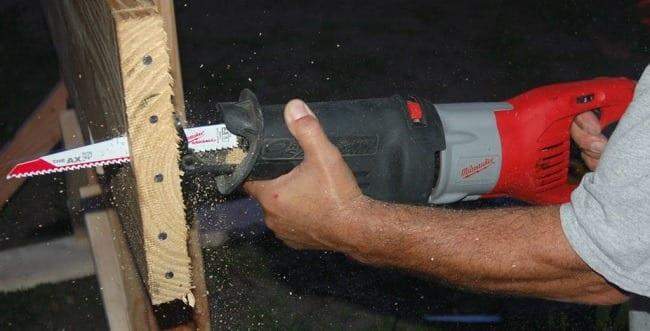
Reciprocating saws are a bit on the shrewd side when compared to other types of saws, but if you plan on doing any demolitions, renovations, simple yard work and landscaping, or just need a versatile saw that can do pretty much anything, they are essential.
These types of saws are not entirely complicated, so the smallest of details and design can make a big difference as to how one performs when compared to another.
With all the choices on the market in the Philippines, it can be difficult deciding on the best reciprocating saw for your own needs.
If you are having a hard time trying to figure out what you need from a reciprocating saw, or simply don’t know where to start, allow us to help.
Learn more about these great tools and find out which one is our top choice!
Best Reciprocating Saws Reviews & Recommendations For 2026
We’ve selected and tested a number of the saws on the market, which we’ve since sorted into two different price ranges, spelling out why we’ve chosen each one to include in our list for the best reciprocating saws for 2026.
We know that it is start of the year but you should acquire new tools for your next woodworking project.
Whether you’re an experienced contractor looking for your next couple of reciprocating saws, or a home DIY hobbyist who is looking to add one to their workshop, we’ve got you covered. There’s something here for everyone.
Best overall – Bosch CRS180K
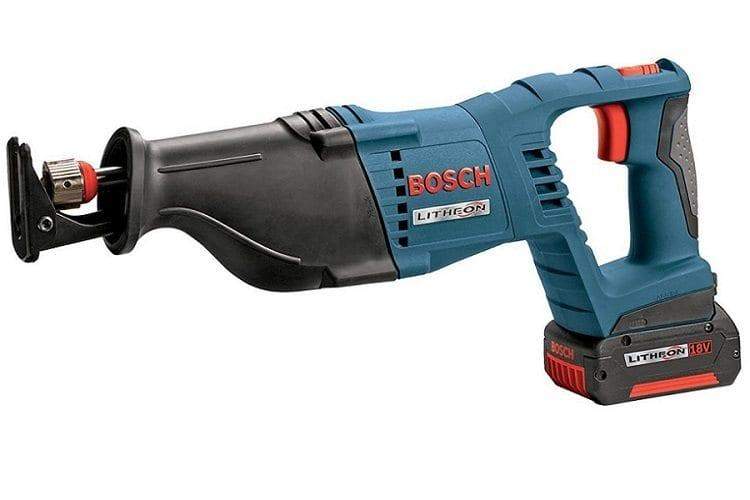
The Bosch CRS180K is a heavy-duty cordless reciprocating saw designed for users who need strong cutting performance, portability, and versatility in one compact tool. It is built for demanding DIY projects and professional jobsite work, offering enough power to handle wood, metal, and general demolition tasks with ease.
This model is especially suited for users who want cordless freedom without sacrificing cutting strength or control.
Cutting Performance and Applications:
18V Bosch Lithium-Ion Battery System: Provides consistent cordless power with good runtime for extended cutting sessions.
Variable Speed Range (2,400–2,700 SPM): Allows controlled cutting depending on material type and task precision.
1-1/8 Inch Stroke Length: Delivers strong cutting action capable of handling materials like 4-inch pipes and 3-inch wood branches.
Control and Operation:
Variable Speed Trigger: Pressure-sensitive control allows speed adjustment without switching modes.
No Secondary Safety Button: Simplifies operation for faster and more intuitive use.
11 Amp Equivalent Cutting Power: Delivers performance comparable to higher-powered corded models in its class.
Features and Design:
Lock-Jaw Blade Clamp System: Enables fast, tool-free blade changes for efficiency on the job.
Dual Blade Included: Provides immediate usability with backup cutting options.
Blade Clamp System: Securely holds blades in place during heavy-duty cutting tasks.
Portability and Build Quality:
Compact Body (17.4 inches): Easy to maneuver in tight or awkward spaces.
Lightweight Design (Approx. 7.6 lbs): Reduces fatigue during extended use or overhead cutting.
Cordless Operation: Allows unrestricted movement without power cables.
Pros:
- Strong cordless cutting performance
- Lightweight and easy to handle
- Variable speed control for precision work
- Quick blade changes with Lock-Jaw system
- Good balance of power and portability
Cons:
- Battery runtime limits extended heavy use
- Not as powerful as large corded demolition saws
- Higher cost compared to basic reciprocating saws
Suitable For:
The Bosch CRS180K is ideal for contractors, renovation workers, and serious DIY users who need a reliable cordless reciprocating saw for demolition, plumbing cuts, and general construction work where mobility and quick setup are important.
Runner-Up – Milwaukee 2720-21
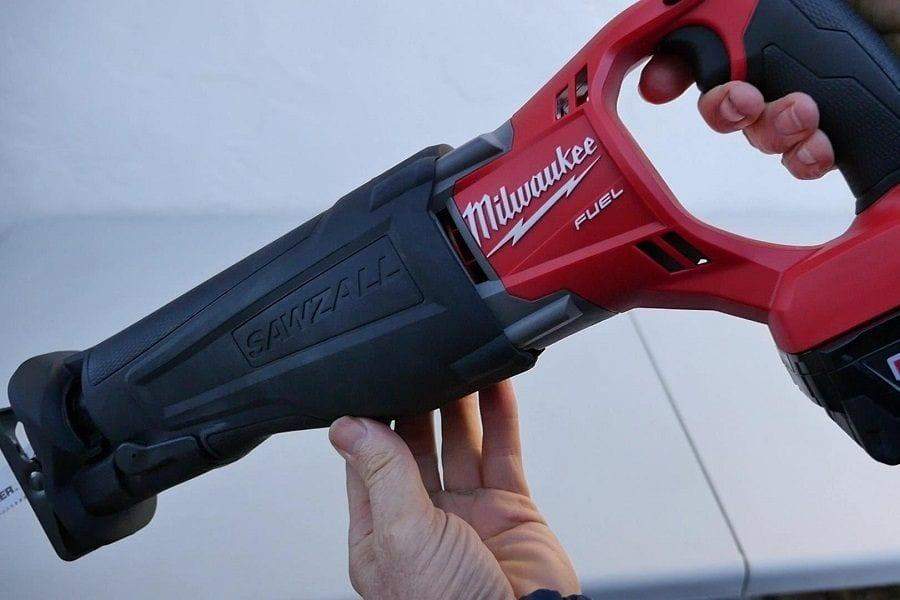
The Milwaukee 2720-21 is a cordless reciprocating saw designed for contractors and serious DIY users who need high cutting power, durability, and reliable battery performance in a portable platform. It is built for demanding jobsite work, including demolition, plumbing, remodeling, and general heavy-duty cutting tasks.
This model is best suited for users who want professional-grade cordless performance combined with intelligent protection systems and strong runtime efficiency.
Cutting Performance and Applications:
18V REDLITHIUM XC 4.0 Battery System: Provides extended runtime and consistent power output for demanding applications.
11 Amp Brushless Motor: Delivers strong cutting performance with reduced heat buildup and improved efficiency.
Up to 3,000 SPM Cutting Speed: Offers powerful stroke action for fast material removal in wood, metal, and mixed materials.
1-1/8 Inch Stroke Length: Standard heavy-duty reciprocating saw stroke for deep, efficient cutting.
Control and Operation:
Single-Speed Variable Trigger (No Mode Switch): Speed is controlled directly through trigger pressure.
Ergonomic Grip Design: Improves comfort and stability during extended use.
No Variable Speed Dial: Simpler control system focused on durability and ease of use.
Features and Design:
REDLINK PLUS Intelligence System: Protects against overload, overheating, and over-discharge to extend tool and battery life.
Adjustable Shoe: Allows better control of cutting depth and blade positioning.
Integrated LED Light: Improves visibility in low-light cutting environments.
Blade Clamp System: Enables quick and secure blade changes.
Portability and Build Quality:
Compact Body (Approx. 17.75 inches): Designed for tight spaces and overhead cutting.
Lightweight Design (Approx. 7.4 lbs): Reduces fatigue during extended operation.
Cordless Operation: Provides full mobility without cable restrictions.
Pros:
- Strong brushless motor with high cutting efficiency
- Excellent battery life with REDLITHIUM XC 4.0 pack
- Durable intelligent protection system (REDLINK PLUS)
- Lightweight and compact for jobsite use
- Fast cutting speed up to 3,000 SPM
Cons:
- No multi-speed or mode selector
- Higher price compared to entry-level models
- Battery system increases overall cost if starting from scratch
Suitable For:
The Milwaukee 2720-21 is ideal for professional contractors, renovation specialists, and advanced DIY users who need a durable, high-performance cordless reciprocating saw for frequent heavy-duty cutting tasks in construction and demolition environments.
Alternative – Makita XRJ05Z
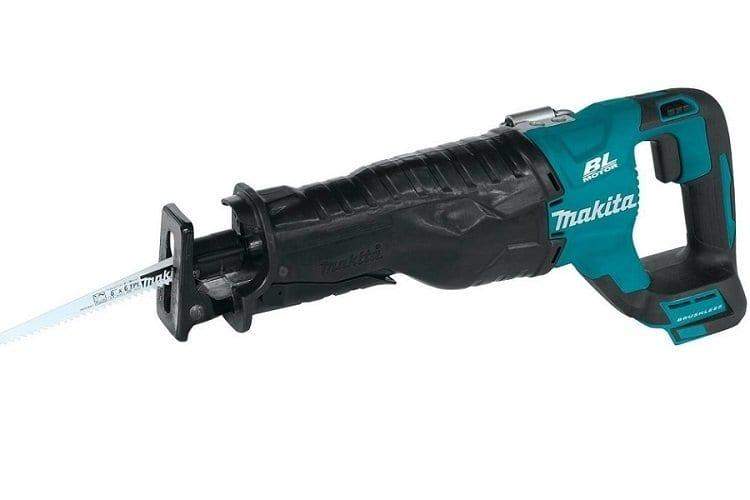
The Makita XRJ05Z is a cordless reciprocating saw designed for users who want smooth cutting performance, long battery life, and reliable operation across demanding jobsite and workshop tasks. It is aimed at professionals and experienced DIY users who value control, durability, and consistent cutting efficiency over raw brute force.
This model is well suited for construction, renovation, plumbing, and general demolition work where portability and precision matter.
Cutting Performance and Applications:
18V Makita LXT Battery System: Provides stable cordless power with fast recharge capability and compatibility across the Makita LXT tool range.
11 Amp Brushless-Equivalent Motor Performance: Delivers strong cutting power suitable for demanding materials in both home and professional use.
1-1/4 Inch Stroke Length: Offers extended cutting reach, capable of handling pipes up to approximately 10 inches in diameter.
Variable Speed Control (2,300–3,000 SPM): Allows adjustment of cutting speed based on material and trigger pressure.
Control and Operation:
Variable Speed Trigger: Provides precise control over cutting intensity.
No Dedicated Blade Clamp System: Requires standard blade change mechanism without a specialized quick-clamp feature.
Ergonomic Rubberized Grip: Improves comfort and reduces fatigue during extended use.
Features and Design:
Star Protection Computer Controls: Monitors load, temperature, and discharge to protect both tool and battery.
Refined Crank Mechanism: Reduces blade deflection and minimizes vibration for smoother cuts.
Integrated LED Work Light: Improves visibility in low-light working conditions.
Tool Hook for Storage: Allows convenient hanging during work breaks.
Tool-Less Blade Change System: Enables faster blade swapping for efficiency on the job.
Portability and Build Quality:
Compact Length (Approx. 17.25 inches): Designed for maneuverability in tight spaces.
Weight (~8 lbs with battery): Balanced for stability and reduced vibration during cutting.
Cordless Operation: Provides full mobility without power cord restrictions.
Pros:
- Smooth and controlled cutting performance
- Long 1-1/4 inch stroke for deeper cuts
- Fast-charging, tool-compatible LXT battery system
- Star Protection improves durability and safety
- Comfortable grip and reduced vibration design
Cons:
- No dedicated blade clamp system
- Not the most aggressive cutting option in its class
- Battery system increases overall cost if starting from scratch
Suitable For:
The Makita XRJ05Z is ideal for contractors, remodelers, and serious DIY users who want a smooth, reliable reciprocating saw for controlled demolition, plumbing work, and general construction tasks where precision, comfort, and battery efficiency are more important than maximum cutting aggression.
DEWALT DC385B
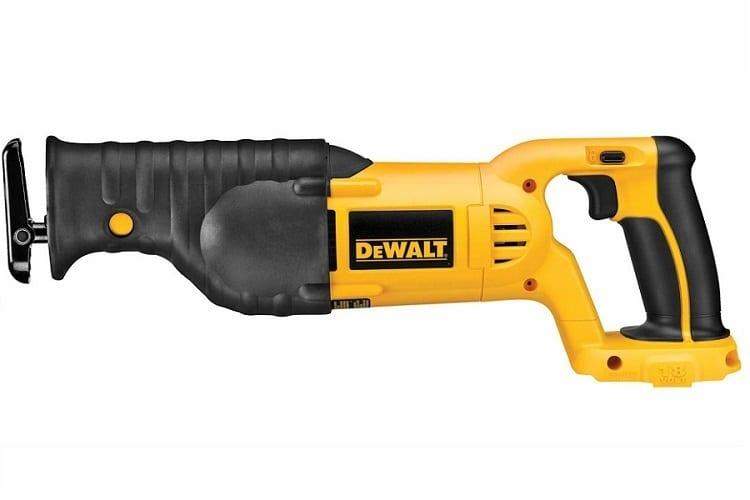
The DEWALT DC385B Bare-Tool is a cordless reciprocating saw designed for contractors and experienced DIY users who want solid cutting performance at a lower entry cost. As a “bare tool” model, it is intended for users who already own compatible DEWALT 18V battery packs and blades, making it a flexible and budget-friendly addition to an existing tool system.
This model is best suited for jobsite cutting, renovation work, and general-purpose demolition tasks where reliability and compatibility matter more than premium extras.
Cutting Performance and Applications:
18V DEWALT Battery System: Provides cordless operation with performance dependent on the selected battery pack.
12 Amp Motor Output (System Equivalent Performance): Delivers strong cutting capability suitable for demanding construction and demolition work.
0–3,000 RPM Variable Speed Range: Allows controlled cutting speed based on trigger pressure and material type.
1-1/8 Inch Stroke Length: Standard heavy-duty reciprocating saw stroke for efficient cutting through wood, pipe, and general building materials.
Control and Operation:
Variable Speed Trigger: Enables direct control of cutting speed through pressure adjustment.
Lever-Action Keyless Blade Clamp: Allows fast blade changes in approximately a few seconds for improved job efficiency.
Four-Position Blade Clamp System: Supports flush cutting and improved versatility in tight spaces.
Features and Design:
Bare-Tool Configuration: No battery or charger included, reducing cost for users already in the DEWALT ecosystem.
Anti-Slip Comfort Grip: Improves handling and control during extended use.
Pivoting Adjustable Shoe: Enhances stability and cutting precision while reducing blade wear.
Open-Top Shoe Design: Improves visibility of the cutting line.
Portability and Build Quality:
Ultra-Lightweight Design (Approx. 5.8 lbs): Reduces fatigue and improves maneuverability.
Cordless Operation: Allows full mobility on job sites without cable restrictions.
Compact Body Design: Easy to use in tight or overhead cutting positions.
Pros:
- Strong cutting performance for its price range
- Very lightweight and easy to handle
- Fast, tool-free blade changes
- Compatible with DEWALT 18V battery ecosystem
- Good control and maneuverability
Cons:
- Battery and charger not included
- Older design compared to newer DEWALT XR models
- Less advanced electronics and protection systems
Suitable For:
The DEWALT DC385B is ideal for contractors, tradespeople, and DIY users who already own DEWALT 18V batteries and want an affordable, dependable reciprocating saw for demolition, remodeling, and general construction cutting tasks without paying for premium bundled kits.
Runner-Up – Porter Cable PCC670B
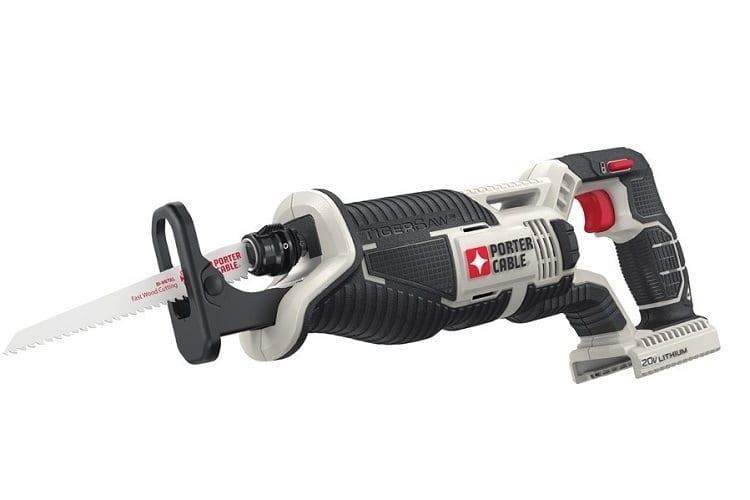
The Porter-Cable PCC670B is a budget-friendly cordless reciprocating saw designed for homeowners and light-duty users who want simple, reliable cutting performance without paying for premium professional features. It is built for general household cutting tasks such as pruning, light demolition, and pipe or wood trimming, where ease of use and affordability matter most.
This model is best suited for occasional DIY users who need a compact and lightweight saw for basic cutting jobs around the home or yard.
Cutting Performance and Applications:
20V Battery System: Provides cordless convenience with adequate power for light to medium cutting tasks.
12 Amp-Class Performance Output (System Equivalent): Delivers sufficient cutting strength for general-purpose use in wood and pipe materials.
Up to 3,000 SPM Variable Speed: Allows controlled cutting speed through trigger pressure for different materials.
1-Inch Stroke Length: Slightly shorter than the industry standard, but still effective for basic cutting tasks.
Control and Operation:
Variable Speed Trigger: Enables intuitive speed control based on how hard the trigger is pressed.
Tool-Free Blade Change System: Quick twist-lock mechanism allows fast blade swaps without additional tools.
Pivoting Adjustable Shoe: Maintains contact with the cutting surface for improved stability and accuracy.
Features and Design:
Compact 14.5-Inch Body: Ideal for working in tight or confined spaces.
Overmolded Ergonomic Grip: Improves comfort and reduces vibration during use.
Simplified Design: Focuses on essential functions rather than advanced professional features.
Portability and Build Quality:
Ultra-Lightweight (Approx. 3.75 lbs): Extremely easy to handle and reduces user fatigue.
Cordless Operation: Allows unrestricted movement without power cords.
Low Vibration Design: Improves control and cutting accuracy for beginners and casual users.
Pros:
- Very lightweight and easy to control
- Affordable entry-level reciprocating saw
- Tool-free blade changes
- Compact size fits tight work areas
- Good performance for basic home use
Cons:
- Shorter 1-inch stroke reduces cutting efficiency
- Not suitable for heavy-duty or professional demolition work
- Limited advanced features compared to premium models
Suitable For:
The Porter-Cable PCC670B is ideal for homeowners, casual DIY users, and beginners who need an inexpensive, lightweight reciprocating saw for occasional cutting tasks such as trimming branches, cutting small pipes, and light renovation work around the home.
Ryobi P515
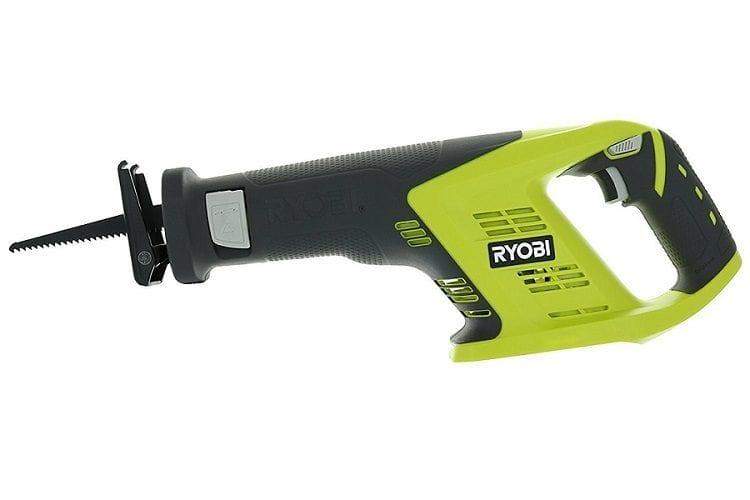
The Ryobi P515 is a cordless reciprocating saw designed for budget-conscious users who already own or plan to use the Ryobi ONE+ 18V battery system. It focuses on simplicity, portability, and affordability while still delivering enough power for basic cutting tasks around the home or jobsite.
This model is best suited for light to moderate DIY work, especially for users who value compatibility within the Ryobi ONE+ ecosystem.
Cutting Performance and Applications:
18V Ryobi ONE+ Battery System: Compatible with a wide range of Ryobi batteries for flexible power options.
12 Amp-Class Performance Output (System Equivalent): Provides adequate cutting strength for general household and light construction tasks.
Up to 3,100 SPM Cutting Speed: Delivers fast blade movement for improved cutting efficiency on wood and similar materials.
1-1/8 Inch Stroke Length: Standard reciprocating saw stroke suitable for common cutting applications.
Control and Operation:
No Variable Speed Dial (Trigger-Based Control): Speed is controlled directly through trigger pressure without preset modes.
Quick Blade Change System: Allows fast swapping of blades for different materials and tasks.
Features and Design:
Compact Body Design: Makes it easier to use in tight or awkward cutting spaces.
Rubber Overmold Grip: Improves handling comfort and reduces slippage during use.
Anti-Vibration Handle Design: Helps improve stability and reduce fatigue during extended cutting sessions.
Portability and Build Quality:
Ultra-Lightweight (Approx. 4.35 lbs): Easy to handle, especially for overhead or one-handed cutting.
Cordless Operation: Full mobility without the restriction of power cords.
Battery-Dependent Runtime: Performance depends on the selected Ryobi ONE+ battery.
Pros:
- Very lightweight and easy to maneuver
- Affordable entry point into cordless recip saws
- Compatible with large Ryobi ONE+ battery ecosystem
- High blade speed (3,100 SPM) for its class
- Compact design ideal for tight spaces
Cons:
- No variable speed mode selection
- Not suitable for heavy-duty demolition work
- Battery and charger may not be included
Suitable For:
The Ryobi P515 is ideal for homeowners, beginners, and DIY users who already use Ryobi ONE+ tools and need a lightweight, affordable reciprocating saw for basic cutting tasks such as pruning, small remodeling jobs, and general household maintenance.
Why You Should Choose Your Reciprocating Saw Carefully?
As we’ve already mentioned, reciprocating saws are not very complicated, but they offer plenty of variance regarding sizes, power, features, and overall capabilities. Like with any power tool, it’s crucial that you get the appropriate tool for the job.
If you purchase an inadequate saw for what need, you are going to end up with lackluster results when using it, and may even put yourself in danger in some scenarios.
Likewise, if you have very minimal needs for your saw, yet you rush out and purchase a professional-level saw that could easily cut your entire house in half, you probably wasted your money, and may even have more power than needed for your required tasks.
So, with reciprocating saws, there are a lot of aspects you’ll need to be mindful of before purchasing to make sure you end up with the right one.
We’ll start by talking about the different types, what they are best for, and all of the factors and specs you can examine before buying.
Things To Consider When Choosing Your Reciprocating Saw
Reciprocating saws have many specifications and features that almost always reflect what they are capable of, how easy they are to use, and how long they can be used.
Here are the main things to examine in relation to what your reciprocating saw needs are.
Blade Speed of the tool
The speed of the blade when cutting is one the primary specs you need to give attention to, as it indicates what the saw is capable of in many ways.
Reciprocating saw speed is measured by SPM, which is strokes per minute. When the saw blade moves forward and back in a quick motion, this is one stroke. The faster the SPM, the faster the blade goes back and forth like a hacksaw (also known as reciprocating, in case you’re wondering where the name comes from).
As you can probably guess, you should aim for saws with variable speed settings.
Most reciprocating saws can offer at least 2,700 SPM, with some lower quality models starting at 2,500 SPM.
A reciprocating saw that can go to 3,000 SPM and above it a good sign, and means that it can easily cut more than just particle boards with ease.
Some reciprocating saws will have two different max variable speed settings, letting you pull down fully on the trigger, with a preset maximum SPM. This is good for when you are sawing items like metal pipes, when you may want the SPM to be lower because of heat generated.
But remember, it is difficult to do proper metal cutting with any reciprocating saw.
SAW Weight
The weight of a reciprocating saw can sometimes get overlooked. If you plan on using the saw for long periods or need one that can be very accurate in highly precise situations, the weight becomes a huge factor.
While reciprocating saw weight ranges are all over the place, it’s best to try and keep things under 9 lbs when using larger models, and under 5 lbs when using smaller models with less power overall.
Overly heavy reciprocating saws can tire you out quickly and are harder to be more precise with.
Blade Stroke – very important feature to consider
The stroke of the blade refers to how far it moves back and forth when sawing. The longer the stroke, the smoother the cut will be, while also being easier.
The vast majority of reciprocating saws usually have a decent blade stroke, but you’ll want to make sure it’s at least 1-inch minimum.
1-⅛” is the most common blade stroke size, with some larger models reaching 1-¼” or even 1-½”.
Power Source – Should You Opt For Portable One
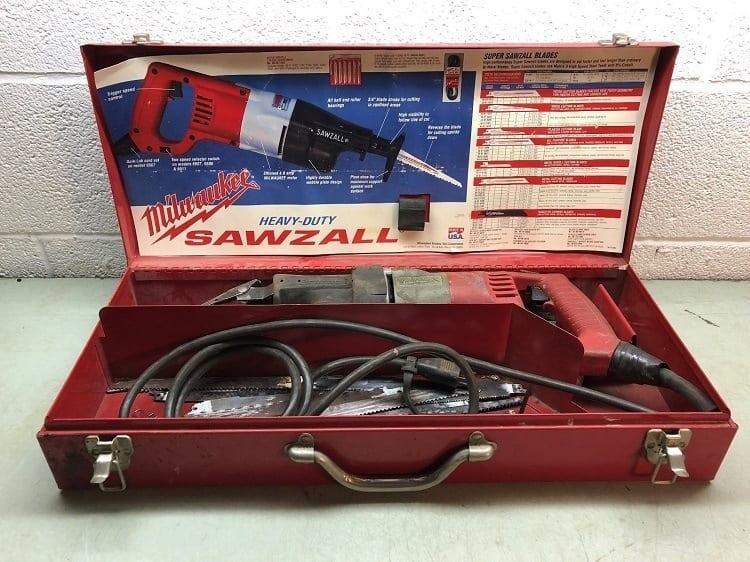
We’ve been through this already, but it’s worth mentioning again.
The saw’s power source plays a big role in its mobility and overall versatility, so if you’re planning on using the saw at construction sites, or far away from your home or work area, make sure you go with cordless.
Extra Features – what more?
Reciprocating saws do offer some extra features among various models that can do everything from making the operation smoother and easier to handle to making blade switches better, to even including blades in the first place.
Blade Changing Method
With most saws, you often have to use some sort of key or tool to loosen the blade so you can switch it out. This happens with some reciprocating saws as well.
Reciprocating saws have a wide range of blade types, so switching them out needs to be fast and seamless, preferably. Look for models that have quick blade changing methods that don’t require a special tool.
Blades And Batteries Included
Believe it or not, some reciprocating saws don’t come with blades. While most blades aren’t all that expensive, some may want to purchase a saw that is fully ready to go from the outset.
The same goes for batteries if you’re going cordless. Always try to buy saws that come with batteries and at least beginner set of blades.
Some major brands offer some saws without batteries, mainly if you already use their compatible battery packs with other tools.
If you need a standalone reciprocating saw that is ready to use, make sure it comes with the blade and battery.
While not essential a good solid carrying case is always recommended for better storage and easier transport. A hard case is even better. Always go with a hard case if you have a choice.
Types Of Reciprocating Saws
Reciprocating saws are all similar for the most part, with the main differences being their size, and how they are powered. Still, they can be classified in a few different ways.
Corded Vs. Cordless
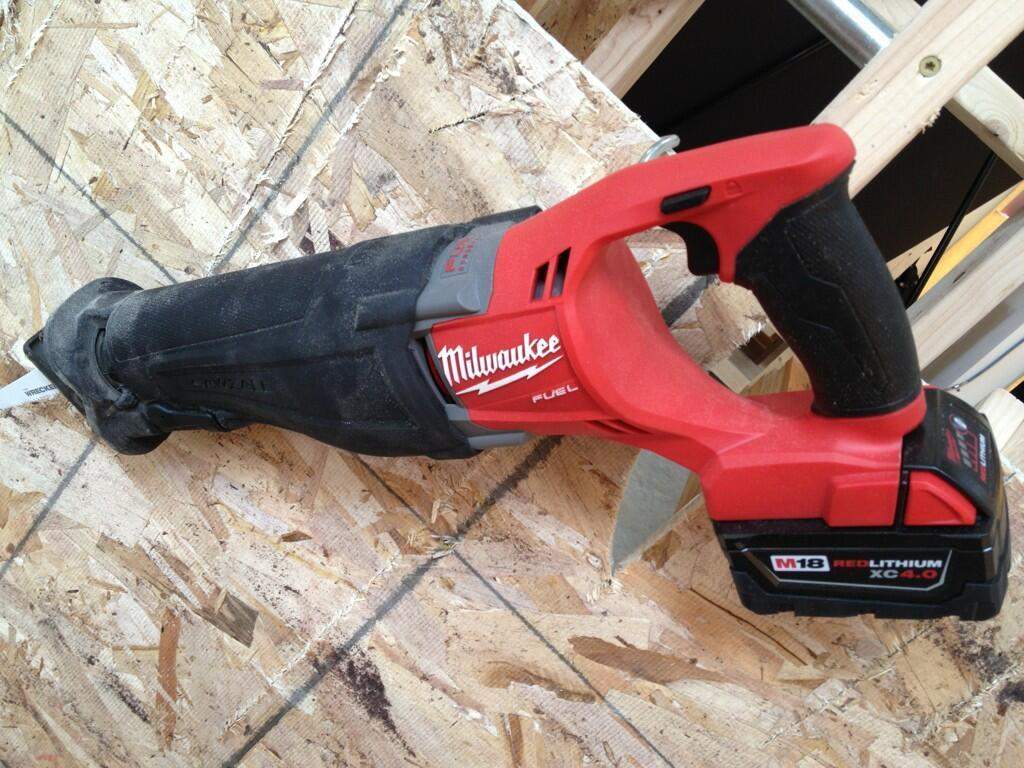
As with most power tools, you’ll find that reciprocating saws come in two different choices regarding power sources: corded, and cordless.
Cordless reciprocating saws operate off of battery power and are by far the most convenient. Battery packs are 9 or 12 volts, and the capacity varies among different models.
While cordless models are the most convenient, they do have a few drawbacks, mainly in regards to their power, and the fact that the batteries can run out. This can be dealt with by purchasing more powerful models and extra batteries, but you’ll pay more.
Corded reciprocating saws can be limited due to needing an electric power source nearby, but this usually isn’t an issue. With corded models, you get unlimited use without worrying about battery limitations, and they are often more powerful as well.
There are times when running a power cord to the saw isn’t always an option, or easy to do, so this is when a cordless reciprocating saw comes in handy. It’s all up to what your own needs and preferences are.
Mini Reciprocating Saws
Reciprocating saws come in a lot of different sizes, ranging from huge models that have 12-inch blade sizes, right down to smaller models that can be used with one hand if needed.
Mini reciprocating saws are the smallest of them all. These saws are not going to be able to take on heavy-duty tasks such as home construction and demolition, but they are great for when you need to cut a pipe in a tight space, or any other situation when space is going to be a hindrance.
Reciprocating Saw Uses
Due to their simple design and exposed blade, reciprocating saws are great for a wide range of uses that span several scenarios. They truly are among the most versatile tools you’ll own.
Here’s some of the most common reciprocating saw uses.
Plumbing & HVAC
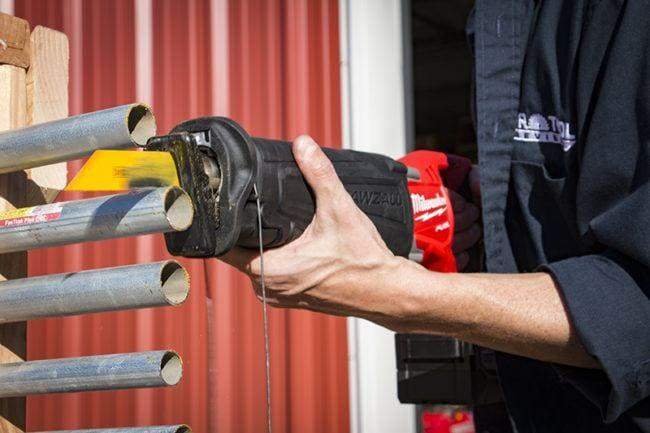
We’ll start with one of the main reasons these saws were developed in the first place. If you’ve ever had to do any plumbing work (or watched anyone do it,) you know that spaces can be incredibly tight. If you’re trying to work on a pipe, sometimes you only have a few inches.
Reciprocating saws can maneuver in tight spaces and then saw off pieces of pipe and whatever else, simply by aiming the blade right onto the pipe. With the squeezing of a trigger, you can quickly cut a pipe end off, without the need to move the saw around a lot.
This can be helpful for HVAC work as well, which often suffers from the same type of space limitations, especially when working inside of a wall, crawl space, or heater closet. Reciprocating saws can make quick work of drywall, and also trim down material pieces as needed too.
It’s safe to say that you’ll never encounter a plumber or HVAC specialist that doesn’t have at least a mini recipe saw in their toolbox.
Window Fitting
Window fitting and trim work can be incredibly frustrating, mainly because you have to get things exact.
If you’re an inch or two off, this word normal mean tearing the wall down and starting again, but if you have a reciprocating saw, you can trim down the frame area and try again.
The same goes when making the framing itself, or when trimming wayward studs and other materials during a project. Just power the saw on, aim the blade, and you can quickly remove obstructions or trim down accordingly.
This can save massive amounts of time and stress.
Construction

Construction is a pretty broad term, but reciprocating saws are very versatile, so their use is broad as well. For the most part, they are used for demolition during construction projects. This includes things like tearing down studs or even removing walls.
An example of this would be removing the drywall and studs on one side of the wall, without affecting the other side in another room. This comes in handy for times when the other room has already been completed or doesn’t need any wall work.
A reciprocating saw allows you to make calculated cuts into the wall and studs, carefully removing them and leaving an empty and clean workspace, with the other wall fully intact. This may not be as fun as taking a sledgehammer to a wall and busting all the way through, but the point remains.
Reciprocating saw use with construction projects also includes applications like removing door frames, cutting off screws and nails, and pretty much any other situation where you need to quickly saw something off or remove anything that’s in the way.
It’s hard to imagine doing demolition on any size project without the use of a reciprocating saw. This is where they shine, and the convenience and quickness are superior to any other tool.
Emergency Rescue Services

Something that may not initially come to mind with reciprocating saws is their usefulness with emergency services. Due to the protruding blade, a this power tool is great for making crude cuts into materials when trying to gain access to someone or something inside.
This most commonly refers to rescues for anyone that’s trapped in a car after a wreck, but can also apply to anyone that’s been trapped in a home after a tornado, or any other significant weather event.
Yard Work
Reciprocating saws can be a great ally for yard work tasks, especially when you need to do a little tree trimming, or just about anything else that’s growing.
The size and shape of a reciprocating saw’s blade make it perfect for cutting down small to moderately sized branches, and whatever else may need some trimming and cutting.
How To Use A Reciprocating Saw?
Using a reciprocating saw is fairly simple. Here’s a quick step-by-step explanation:
Choose The Blade
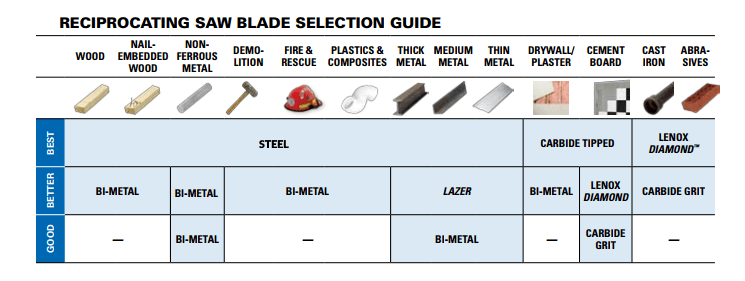
The first step with a should always be the blade selection. You’ll need first to identify what the main material will be that you’re cutting, and then select the right blade for the task. If you’re unsure, just refer to the blade info up above.
Insert Blade
Now it’s time to put the blade into the saw and mount it. Fortunately, this is very easy. Simply insert the back end of the blade into the blade slot in the front of the saw, and make sure it’s all the way to where it can be secured by the blade clamp.
Now access your blade clamp, and use it to secure the blade in place firmly. Pull on the front end of the blade to make sure it’s secure before moving on.
Adjust The Shoe
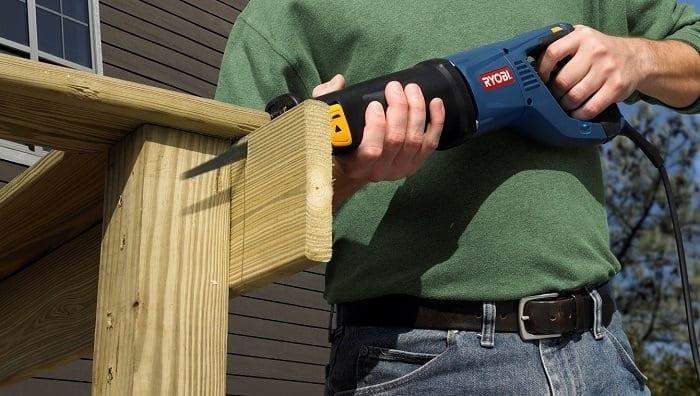
This isn’t always necessary, but it’s always good to make sure you have the shoe set to where it needs to be before cutting. If you’re cutting into the especially hard material, you may want to angle the shoe more, so it gives the blade a sharper angle.
The adjustment can also be in regards to the blade depth. If you’re making freehand cuts on exposed nails and lumber pieces, this depth probably won’t matter/ However, if you’re cutting into a wall, and don’t want your blade going all the way through and out the other side, set the shoe to prevent it from doing so.
Squeeze The Trigger
As you probably already know, the trigger activates the blade. If you’ve got the right blade, angle, and shoe setting, you’re all ready to go. Squeeze the trigger to get the blade going. If you are cutting piping, or larger wood pieces, start the blade off slow and then increase speed after your little ways in.
Make The Cut
As you cut, be sure to apply even pressure in whatever direction you’re moving the blade, doing your best to keep it controlled throughout the cutting process — which hopefully doesn’t take more than a few seconds, ideally.
Conclusion

Reciprocating saws are easily one of the most versatile and simple saws, and actually, pretty fun to use at times as well.
To reiterate what I said earlier. If you ever plan on doing any demolition, renovations, plumbing work, or landscaping involving a saw, a reciprocating saw is always up to the task, making it a true all-in-one saw in many ways.
Hopefully, you have a better idea on how to shop for one, and how to match your anticipated needs to a particular model. The six best reciprocating saws listed above all make valuable additions to your shop lineup, so happy shopping, and as always, thanks for reading.